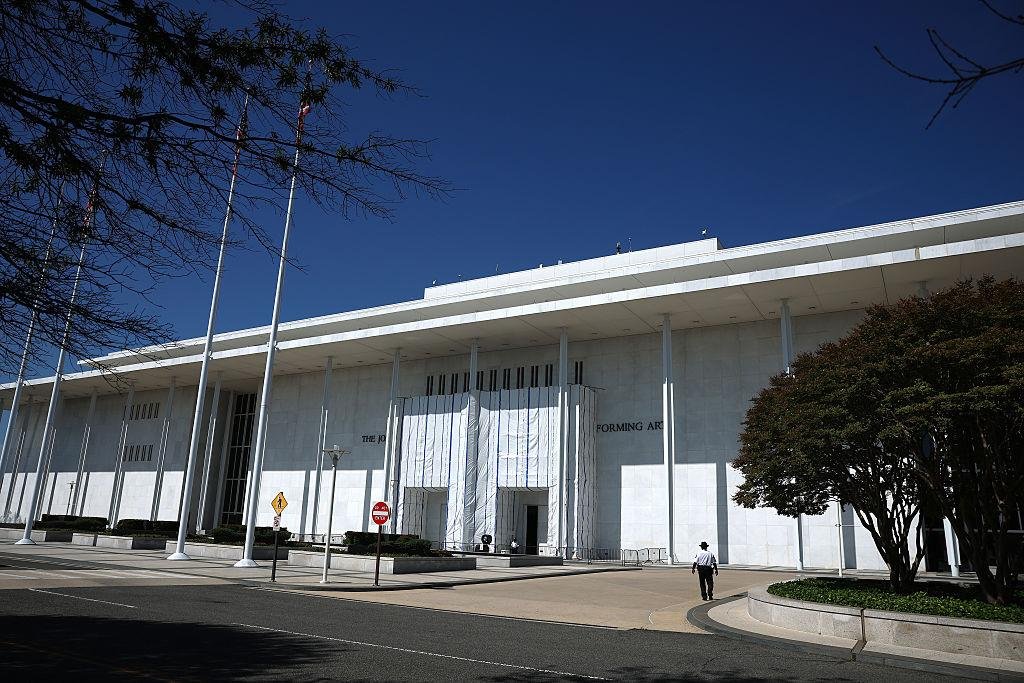
The current closure of Washington, D.C.’s John F. Kennedy Center for the Performing Arts is temporary and is intended to address immediate safety concerns, according to the U.S. Department of Justice.
In a court filing on September 17, government lawyers said the current shutdown is separate from the Kennedy Center board’s broader plan to close the facility for renovations. The Justice Department said the temporary closure is expected to last about one week while officials assess safety risks inside the aging building.
The clarification comes amid a growing legal dispute over the future of the Kennedy Center, including questions about its closure, renovation plans and efforts connected to President Donald Trump’s name and role at the institution.


Why Was the Kennedy Center Closed?
Kennedy Center Executive Director and Chief Operating Officer Matt Floca said the temporary closure was necessary because of what he described as serious public-safety risks caused by structural deterioration.
According to a court declaration, the building will remain closed for at least seven days while officials examine areas showing severe deterioration. The closure could be extended if further safety problems are identified.
The concerns include damage associated with water intrusion, problems around the roof terrace and a recent partial ceiling collapse.
Earlier this month, a section of plaster reportedly fell from the Grand Foyer ceiling during a storm. No injuries were reported, but the incident prompted additional inspections of the building.
DOJ Says Current Closure Is Different From Renovation Plan
One of the most important points in the latest court filing is the distinction between two separate actions.
The Kennedy Center board recently voted to close the facility for an extended renovation project. That plan could involve a much longer shutdown.
However, DOJ lawyers argue that the closure currently in effect is different.
They say the present shutdown was ordered by management to allow officials to evaluate immediate safety concerns and should not be treated as the implementation of the board’s longer-term renovation decision.
The distinction is important because a federal judge has previously placed restrictions on the center’s ability to close for major renovations without further court review.
Legal Battle Over the Kennedy Center Continues
The temporary closure has become part of a broader legal dispute involving Representative Joyce Beatty, a Kennedy Center board member who has challenged several actions involving the institution.
Beatty’s lawyers have argued that the closure could conflict with an existing court order and have asked the federal court to intervene.
The Justice Department, representing the administration and other defendants, disputes that interpretation. DOJ argues that the court’s restrictions on a long-term renovation closure do not prevent management from temporarily shutting the building to deal with urgent safety hazards.
The court is therefore being asked to distinguish between an emergency safety closure and the separate long-term renovation plan.
Trump’s Role Adds Another Layer to the Dispute
President Donald Trump is closely involved in the Kennedy Center controversy. He serves as chairman of the center’s board, and his administration has supported major changes to the institution.
A separate legal dispute concerns attempts to recognize Trump on the Kennedy Center building.
A federal judge has ruled that the center cannot add Trump’s name to the building without congressional approval. The administration has appealed the ruling.
The dispute over Trump’s name has become closely connected to the debate over the center’s finances and renovation plans.
Trump has said that if his administration is expected to help fund or support the center’s restoration, it should receive recognition for doing so.
Trump Warns the Center Could Be Ripped Down
The situation escalated further after Trump said the Kennedy Center could eventually be “ripped down” if his administration could not receive recognition for its role in supporting the institution.
His comments were cited in a court filing submitted by Beatty’s lawyers. They also referenced a photograph showing Trump looking at a document that appeared to contain the word “DEMOLISHED.” Reuters said the photograph itself had not been independently verified.
The Kennedy Center, meanwhile, has said that nothing is currently being demolished.
CBS News reported that Kennedy Center officials have emphasized that the present closure should not be interpreted as a demolition of the building.
What Happens After the One-Week Closure?
The immediate next step is a safety assessment.
Officials are expected to examine parts of the building affected by structural deterioration and determine whether public access can safely resume.
If additional hazards are discovered, the temporary closure could potentially be extended. The executive director said such decisions would be evaluated on a week-to-week basis.
At the same time, the courts will continue considering the dispute over the longer renovation plan.
That means the Kennedy Center’s future remains tied to both building safety decisions and ongoing legal proceedings.
Why the Kennedy Center Matters
The Kennedy Center is one of the United States’ most prominent performing arts institutions. It opened in 1971 and serves as a national cultural center and living memorial to President John F. Kennedy.
The building has hosted major performances, concerts, theatrical productions and cultural events for decades.
Congress has also allocated hundreds of millions of dollars for restoration and renovation work. The current dispute is therefore not simply about whether the building needs repairs, but also about how those repairs should be carried out and under what legal authority.
Conclusion
The Justice Department’s latest court filing provides an important clarification: the Kennedy Center’s current closure is described as temporary and is intended to assess immediate safety risks.
The current shutdown is separate, according to DOJ, from the board’s longer-term renovation plan.
However, the legal battle over the center’s future is continuing. Questions surrounding the renovation, public access, Trump’s role, the proposed naming changes and the building’s structural condition remain before the courts.
For now, the focus is on determining whether the Kennedy Center can safely reopen after its temporary safety assessment.
About the Author