Rudraksha has held a special place in Hindu spiritual traditions for centuries. Often seen around the necks of devotees, saints and spiritual practitioners, these small, naturally textured beads are closely associated with Lord Shiva, meditation, prayer and self-discipline.
For devotees, Rudraksha is not simply a piece of jewellery. It is regarded as a sacred symbol that can remind the wearer of Shiva, encourage spiritual practice and support a disciplined way of life.
But why is Rudraksha considered so powerful? The answer lies in a combination of scriptural tradition, symbolism, mantra practice and devotion.


What Is Rudraksha?
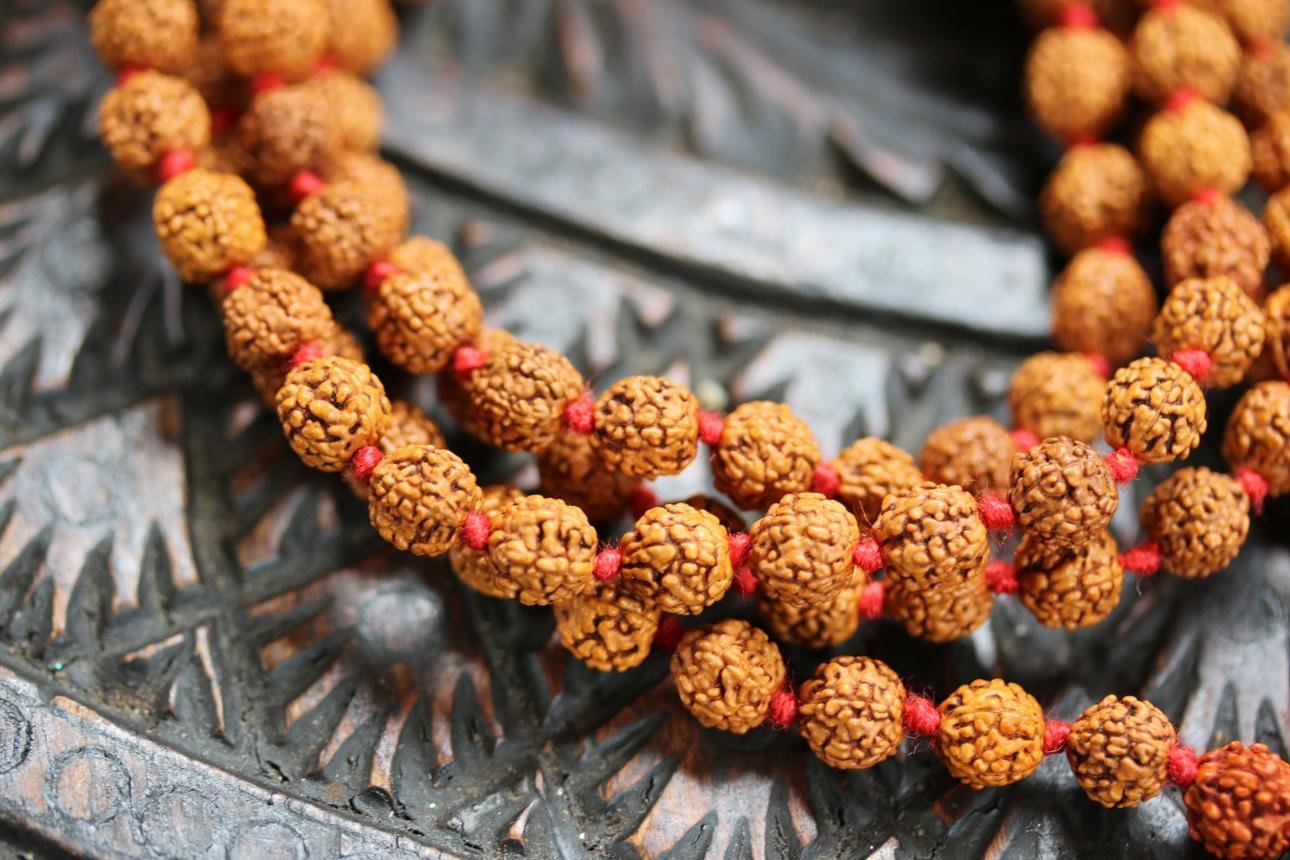
Rudraksha is the seed of trees belonging to the Elaeocarpus genus. The bead has natural lines or divisions on its surface, traditionally called mukhi, meaning “faces.”
Different Rudraksha beads are described according to the number of these natural divisions. Hindu traditions associate different mukhi Rudrakshas with different divine forms and spiritual qualities.
The sacred literature surrounding Shaivism gives Rudraksha an important place in the devotional life of Shiva worshippers. The Rudrakshajabala Upanishad, for example, discusses the origin, characteristics and spiritual significance of these beads.
The Connection Between Rudraksha and Lord Shiva
One of the most famous traditions explains the connection through a symbolic story about Lord Shiva.
According to Shaiva literature, Shiva entered a deep state of meditation. When he opened his eyes, tears fell upon the earth, and Rudraksha plants emerged from those tears. The name itself is traditionally understood as being connected with Rudra, a name of Shiva, and aksha, meaning eye.
The Shiva Purana also presents Rudraksha as especially dear to Shiva and describes its use by devotees.
This story gives Rudraksha a powerful spiritual symbolism: the bead represents a connection between the devotee and Lord Shiva.
Rudraksha as a Symbol of Meditation
One important reason devotees value Rudraksha is its association with japa and meditation.
A Rudraksha mala can be used for counting repetitions of a mantra. As the devotee moves from one bead to another, the repetitive physical movement provides a simple point of concentration.
The practice can help establish a regular rhythm for prayer and meditation.
Shaiva texts specifically describe Rudraksha as being associated with the repetition of Shiva mantras and spiritual practices.
For many devotees, therefore, the real spiritual value of the mala is not just the physical bead—it is the daily discipline and remembrance of God that the bead encourages.
Why Do Rudraksha Beads Have Different “Mukhi”?
The natural lines on a Rudraksha are traditionally called its mukhi.
Shaiva literature gives symbolic meanings to different mukhi beads. For example, traditions associate:
- 1 Mukhi – the supreme or non-dual reality
- 2 Mukhi – Ardhanarishvara, representing Shiva and Shakti
- 3 Mukhi – the sacred fires
- 4 Mukhi – Lord Brahma
- 5 Mukhi – the five-faced form of Shiva
- 6 Mukhi – Kartikeya
- 7 Mukhi – the seven worlds and associated divine symbolism
These associations come from traditional religious texts and should be understood as spiritual symbolism rather than scientifically established effects.
Rudraksha and the Five-Faced Bead
The 5 Mukhi Rudraksha is particularly familiar because five-faced beads are widely used in malas.
Traditional Shaiva literature associates the five-faced Rudraksha with the five-faced form of Shiva.
Because of its association with Shiva and mantra practice, many devotees use a 5 Mukhi mala for regular japa and meditation.
The important point is that its value for a devotee comes from faith, spiritual practice and traditional meaning, rather than simply possessing the bead.
Can Rudraksha Bring Peace and Protection?
Devotional traditions often describe Rudraksha using ideas such as purification, protection, spiritual strength and freedom from negative influences.
The Shiva Purana contains particularly strong descriptions of the spiritual merit associated with wearing Rudraksha and using it during japa.
However, these are religious beliefs and scriptural claims, not guarantees of supernatural or medical outcomes.
For a devotee, the deeper meaning can be understood differently: wearing Rudraksha can serve as a constant reminder to maintain calmness, prayer, self-control and awareness of Shiva.
Rudraksha Is More Than a Necklace
A common mistake is to think that simply wearing Rudraksha automatically transforms a person’s life.
Traditional Shaiva teachings place Rudraksha within a broader spiritual lifestyle involving mantra, meditation, discipline and devotion. Shaiva Upanishadic literature describes sacred ash and Rudraksha as visible marks that can support the seeker’s spiritual path and contemplation of Brahman.
This gives Rudraksha a deeper purpose.
The bead can remind a devotee:
“Remember Shiva. Control the mind. Speak truthfully. Live with discipline.”
In this sense, its spiritual power is closely connected with the consciousness and practice of the person wearing it.
Why Devotees Feel a Deep Connection With Rudraksha
For many devotees, the emotional connection comes from several elements working together:
1. Connection with Shiva
Rudraksha is traditionally associated directly with Lord Shiva.
2. Mantra and Japa
The beads can be used to count mantra repetitions and establish a regular spiritual routine.
3. Meditation
Holding the beads provides a physical focus during prayer.
4. Tradition
Generations of Shaiva devotees have used Rudraksha as part of their spiritual lives.
5. Symbolism
The bead represents remembrance, devotion, discipline and the seeker’s relationship with Shiva.
Rudraksha and the Modern Devotee
In modern life, people often struggle with distraction, stress and an inability to maintain a consistent spiritual routine.
For a believer, a Rudraksha mala can become a simple daily reminder to stop for a few minutes, chant a mantra and reconnect with one’s spiritual purpose.
That does not mean Rudraksha should be treated as a substitute for medical treatment, professional advice or practical solutions to life’s problems.
Its significance is primarily spiritual and devotional.
The Deeper Meaning of Rudraksha
Perhaps the deepest message behind Rudraksha is not that a particular bead will magically solve every problem.
Instead, it represents the path of remembrance.
Every time a devotee touches a bead during japa, the bead can remind them of Shiva. Every time the mala is seen around the neck, it can serve as a reminder of one’s spiritual commitments.
That is why Rudraksha has remained important to devotees for generations.
The Shiva Purana and Shaiva Upanishadic traditions give Rudraksha an exalted spiritual status, while its practical use in japa connects the sacred symbol with everyday devotional practice.
Final Thoughts
Rudraksha holds such deep spiritual importance because it brings together Shiva symbolism, ancient religious tradition, mantra practice, meditation and personal devotion.
For believers, its greatest value may not simply lie in the bead itself, but in what it represents: remembering Lord Shiva and living a more conscious, disciplined and spiritually focused life.
In the end, Rudraksha is best understood not merely as something to wear, but as a symbol of devotion and a reminder of the spiritual journey within.
About the Author