
6
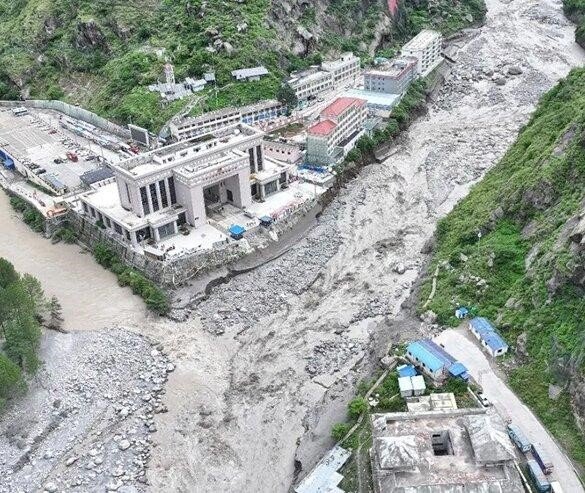
A catastrophic flash flood triggered by a glacier collapse along the Nepal-China border has left behind a devastating toll, with more than 1,000 people confirmed dead in Nepal and thousands still missing.
Yet across the border in Tibet, China has officially reported just 16 deaths, while hundreds remain unaccounted for.
The huge difference has prompted questions online about whether the Chinese authorities are reporting the full scale of the disaster.
But what does the available evidence actually show?
Nepal’s Death Toll Has Crossed 1,000
The disaster struck on August 26 after a massive collapse of ice, rock and debris in the Himalayan region sent floodwater downstream.
Nepal has suffered the overwhelming majority of the confirmed deaths.
Reuters reported on September 2 that at least 1,114 people had been confirmed dead in Nepal, while nearly 4,000 remained missing.
Other reports have put the Nepal death toll at around 1,118 as authorities continued recovering bodies and updating records.
The destruction has been particularly severe in areas including Rasuwa and Nuwakot.
Homes, bridges, roads and hydropower infrastructure were swept away by the enormous volume of water and debris.
China Reports 16 Deaths in Tibet
On the Chinese side of the border, the official numbers are dramatically different.
Chinese state media has reported 16 deaths in Tibet and 546 people missing.
Reuters reported that China’s official death toll had remained at 16 as of September 2.
That means the confirmed death toll on the two sides of the border looks very different:
| Location | Officially reported deaths | Missing |
|---|---|---|
| 🇳🇵 Nepal | 1,100+ | Nearly 4,000 |
| 🇨🇳 Tibet | 16 | 546 |
These numbers are striking, but they should not automatically be interpreted as proof that China is hiding deaths.
Why Is the Difference So Large?
There are several possible explanations.
1. The Worst Destruction Was on the Nepal Side
The geography of the flood matters.
Although the disaster originated near the Nepal-China border, the floodwaters travelled downstream through populated valleys in Nepal.
Several settlements and major infrastructure projects in Nepal were directly hit.
Reuters reported that the disaster damaged multiple hydropower facilities, destroyed bridges and left huge quantities of debris across affected areas.
This means the difference in fatalities could partly reflect where the largest downstream population and infrastructure impacts occurred.
2. Tibet’s Population Density Is Much Lower
Large portions of the affected Tibetan region are sparsely populated compared with Nepal’s downstream valleys.
A powerful flood can therefore cause enormous physical destruction without necessarily producing the same number of deaths.
This is an important reason why comparing the two death tolls alone cannot establish that one side is concealing information.
But There Are Still Information Gaps
The bigger issue is not simply the number 16.
It is the amount of information available from the Chinese side.
Access to disaster zones in Tibet has been more restricted than access to many areas in Nepal.
Reuters reported that China was working to restore access to the devastated Gyirong area, including repairing routes affected by the flooding.
Limited physical access can make independent verification difficult.
When journalists, outside rescue teams and independent investigators cannot freely reach affected locations, it becomes harder for the outside world to independently verify government figures.
That does not prove that the figures are false—but it does create an information gap.
China Says Hundreds Are Missing
One important detail is often lost in social-media discussions.
China’s official figure is not simply “16 dead.”
Chinese authorities have also reported 546 people missing.
That is a significant number.
Missing people could later be found alive, or the number could change as rescue teams gain access and authorities identify victims.
So the current 16-death figure should not be interpreted as the final toll.
Nepal Also Has Thousands Missing
The same problem exists in Nepal.
Nearly 4,000 people were still unaccounted for in the latest Reuters reporting.
Some of those missing could eventually be located alive.
Others could be among bodies buried beneath mud, debris or collapsed infrastructure.
This is especially important because the disaster destroyed several hydropower facilities.
Rescue teams have been concentrating on tunnels where workers are believed to be trapped.
Reuters reported that dozens of workers were still believed to be inside hydropower tunnels, making these sites some of the last major hopes for finding survivors.

4
Could the Chinese Death Toll Increase?
Yes.
The official Chinese figure could change as search operations continue.
This has happened on the Nepal side as well.
In the days following the disaster, Nepal’s reported death toll increased sharply as rescuers recovered bodies and authorities received information from previously isolated communities.
The same process could happen in Tibet if additional areas become accessible.
However, there is currently no reliable evidence proving that China has deliberately concealed a much larger death toll.
That distinction is important.
What We Can Actually Verify
Based on current reporting, several facts are clear:
✔ The Nepal death toll has exceeded 1,100.
✔ Nearly 4,000 people remain missing in Nepal.
✔ China has officially reported 16 deaths in Tibet.
✔ China has reported 546 people missing.
✔ Access to some affected Tibetan areas has been difficult.
✔ The Chinese death toll could change as rescue and recovery operations continue.
❌ There is currently no independently verified evidence proving that China is secretly hiding hundreds or thousands of additional deaths.
Reuters and AP reporting support the official figures while also describing continuing rescue and access challenges.
Why Independent Verification Matters
The biggest concern in any disaster involving restricted-access areas is independent verification.
Government statistics are important, but journalists, humanitarian organisations and independent rescue teams can provide additional confirmation.
The situation is particularly difficult in remote Himalayan terrain.
Roads have been destroyed, communication systems damaged and entire areas cut off.
That makes obtaining an accurate death toll difficult even without any deliberate withholding of information.
The Bigger Humanitarian Crisis
The numbers on both sides of the border represent more than a political debate.
Thousands of families are still waiting for information about missing relatives.
In Nepal, more than 900 workers connected to hydropower projects were reportedly among those missing, with hundreds feared trapped inside tunnels.
International rescue teams have also joined operations.
Nepal has received technical assistance from countries including India, China and South Korea, while specialist teams are helping with tunnel searches and identification of victims.
What Happens Next?
The next few days will be critical.
As roads into affected areas reopen and rescuers reach previously inaccessible locations, the number of confirmed deaths and missing people could change.
For Tibet, the key question is whether the official figure of 16 remains stable as access improves.
For Nepal, rescuers are still searching hydropower tunnels, debris fields and isolated communities for survivors and victims.
Only after these operations are substantially completed will a clearer picture of the disaster’s true human toll emerge.
About the Author