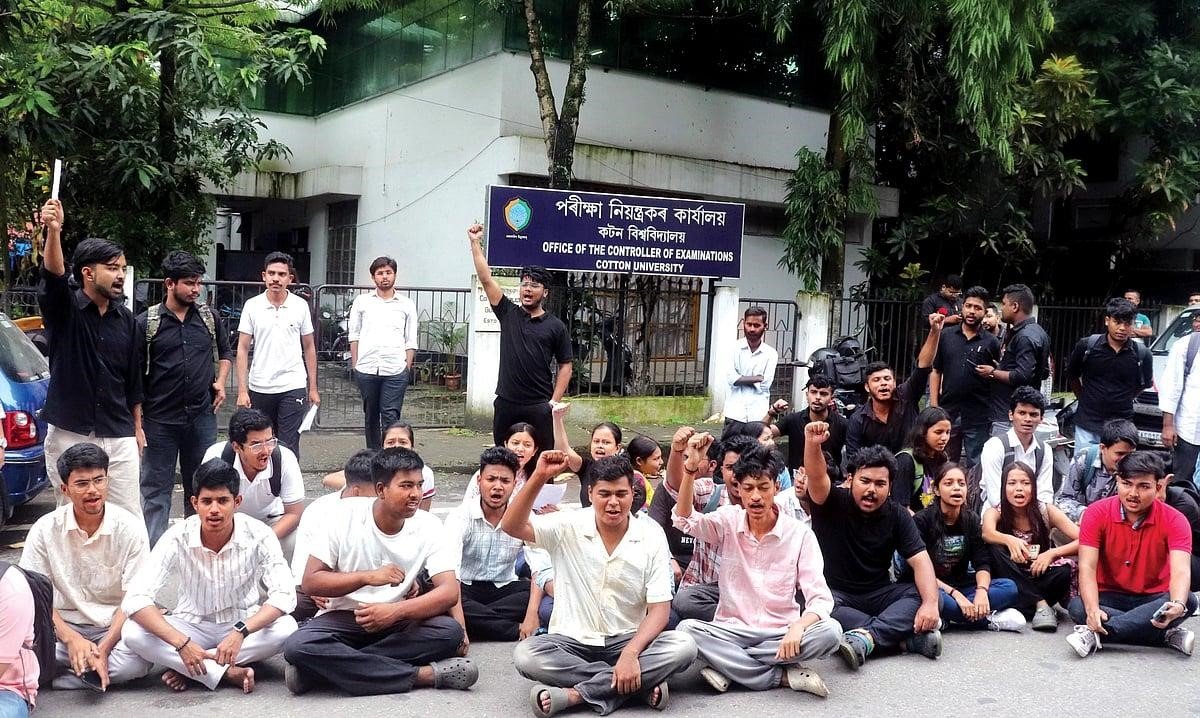


A student’s death at the Lakshmibai National Institute of Physical Education (LNIPE) in Sonapur, on the outskirts of Guwahati, has triggered protests and demands for a detailed investigation into the medical treatment she received.
Shruti Upadhyay, a student at the institute, died during treatment at a hospital in Guwahati. Her roommate has alleged that Shruti had been repeatedly given painkillers by the institute doctor for severe pain, but her condition continued to worsen. The exact cause of her death remains under investigation.
Who Was Shruti Upadhyay?
Shruti Upadhyay was a student at LNIPE’s Sonapur campus in Assam. According to reports, she had been suffering from severe back pain for around four years.
Her roommate, identified as Shweta, alleged that Shruti repeatedly sought medical help but was given painkillers instead of receiving treatment that addressed the underlying cause of her continuing pain.
The roommate said Shruti’s pain did not improve and instead became increasingly severe. She was eventually advised to undergo tests at a hospital in Sonapur.
Roommate’s Serious Allegation Against Campus Doctor
The most serious allegation has come from Shruti’s roommate, who claimed that the institute doctor repeatedly prescribed painkillers.
According to the roommate, Shruti’s condition did not improve despite the medication, while her pain continued to increase.
Students are now demanding answers about whether Shruti received appropriate medical evaluation and whether her worsening symptoms should have led to additional tests or specialist treatment.
The roommate has called for an investigation into the treatment provided to Shruti, the doctors who attended to her and the medical facilities available at the institute.
Importantly, these are allegations made by the roommate and have not been established as the cause of Shruti’s death.
Mother Says Family Was Not Properly Informed
Shruti’s mother has also raised questions about how the family was informed about her daughter’s medical condition.
According to her account, the institute did not directly inform her about the seriousness of Shruti’s condition. Instead, Shruti herself reportedly called her mother from the hospital and told her that she was very unwell.
Her mother then rushed to the hospital.
She alleged that when she contacted the institute, she was told that Shruti was doing fine and that doctors were attending to her.
However, when she reached the hospital, she said she was shocked by Shruti’s condition and claimed she could barely recognise her daughter.
Students Protest, Demand Investigation
The death has led to protests by students at the institute.
Students have questioned the medical treatment Shruti received and are demanding a proper investigation into the circumstances surrounding her death.
Their concerns include the treatment provided by the campus medical system, the response when Shruti’s condition deteriorated and whether appropriate medical tests and referrals were made in time.
The case has therefore raised broader questions about emergency medical facilities and protocols available to students living on institutional campuses.
What Has the Institute Said?
LNIPE Dean Shankarjyoti Basumatary said the institute had informed the police about the circumstances surrounding the death.
He also said that a post-mortem examination had been conducted and that the institute would follow the required protocol.
The institute’s vice chancellor reportedly met protesting students and also spoke with Shruti’s parents on Wednesday night.
The chief warden, Merlin Gogoi, has been suspended. However, the institute had not issued a detailed public response to the allegations made by Shruti’s family at the time of the NDTV report.
What Did the Post-Mortem Reveal?
At present, the publicly available report does not establish a confirmed cause of death from the post-mortem.
The dean said that the post-mortem had been conducted and that the institute would follow the protocol. The exact medical cause therefore needs to be established through the investigation and relevant medical records.
This distinction is important because allegations about repeated painkiller use should not automatically be treated as proof that medication caused the death.
Why This Case Is Raising Medical Negligence Questions
The case has raised questions about whether prolonged or worsening pain should trigger further medical investigation rather than only repeated symptomatic treatment.
Painkillers can provide temporary relief from symptoms, but persistent or worsening pain may require doctors to investigate its underlying cause.
For students living away from home, campus medical services can be especially important because they may depend on institutional doctors for initial medical care.
However, whether there was medical negligence in Shruti’s case can only be determined after examining her medical records, prescriptions, test reports, hospital records and other evidence.
What Happens Next?
The investigation is expected to focus on several key questions:
- What illness or medical condition was Shruti suffering from?
- What medicines were prescribed to her?
- How frequently were they prescribed?
- Were appropriate diagnostic tests recommended?
- When did her condition become critical?
- How quickly was she transferred to hospital care?
- What was the medical cause of death?
- Did any treatment or delay in treatment contribute to her condition?
Answers to these questions will be important before responsibility can be established.
BharatPedia Verdict
The death of Shruti Upadhyay has understandably caused concern among students and her family. The allegations of repeated painkiller prescriptions and questions over communication with her family deserve a transparent investigation.
At the same time, it is important not to conclude that the campus doctor or any individual was responsible for her death until investigators establish the facts.
The focus should now be on an independent examination of Shruti’s medical history, treatment records, hospital records and post-mortem findings. If negligence is established, appropriate action should follow. If the allegations are not supported by evidence, the investigation should make that clear as well.
This article is based on currently available reports. Details may change as the investigation progresses.
About the Author