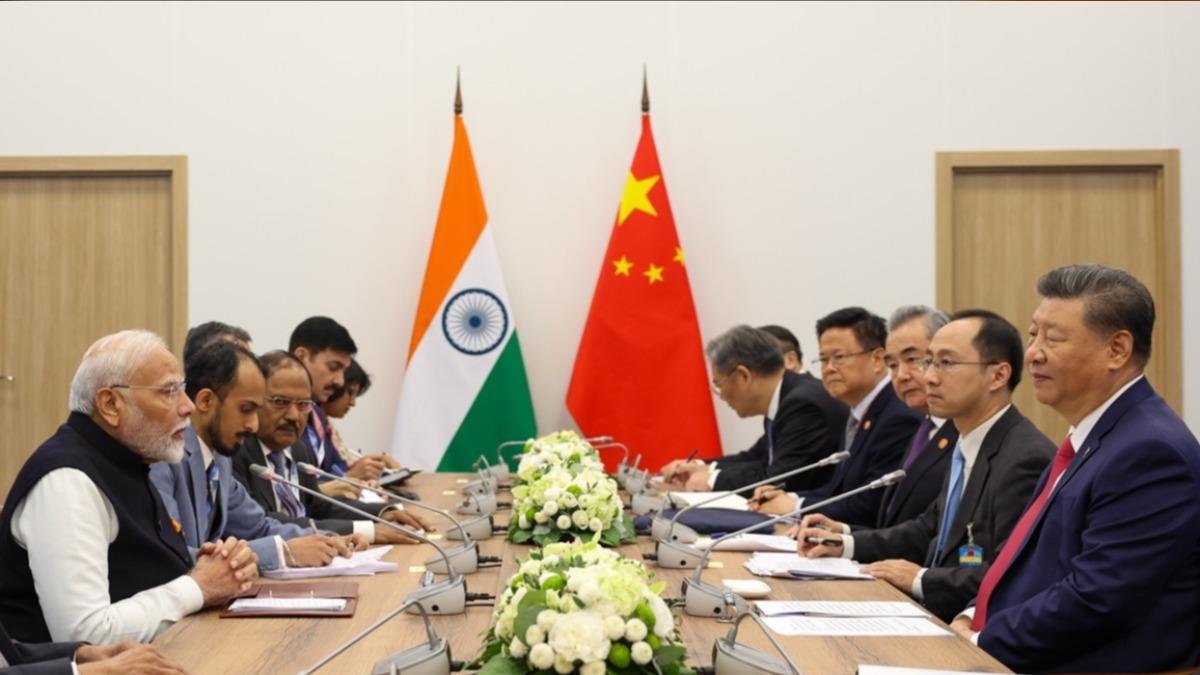
Prime Minister Narendra Modi and Chinese President Xi Jinping are set to hold a key bilateral meeting in New Delhi during the 18th BRICS Summit. Xi’s visit is particularly significant as it is his first trip to India in seven years and comes after years of tension following the 2020 Galwan Valley clash.
The meeting comes at a time when India-China relations are showing signs of a cautious thaw. Both countries have taken steps to improve diplomatic and economic engagement, but major challenges remain.
Among the most important issues expected to be discussed are the Line of Actual Control (LAC), border stability, trade imbalance, investment, technology access and economic cooperation.


Why Is the Modi-Xi Meeting Important?
Xi Jinping’s visit to India carries considerable diplomatic significance.
His previous visit to India was in 2019 for the informal Modi-Xi summit in Mamallapuram. Relations deteriorated sharply after the 2020 military confrontation in eastern Ladakh.
Since then, India and China have maintained military and diplomatic channels while working toward reducing tensions along the border.
The upcoming meeting provides an opportunity for both leaders to review the progress made so far and discuss the next stage of bilateral relations.
LAC and Border Stability Remain the Biggest Challenge
The Line of Actual Control remains one of the most sensitive issues between India and China.
The 2020 Galwan Valley clash resulted in the deaths of Indian soldiers and Chinese troops and triggered a prolonged military standoff in eastern Ladakh.
Since then, several rounds of military and diplomatic negotiations have taken place.
India’s focus remains on ensuring peace and stability along the LAC, while also seeking greater clarity and predictability regarding military deployments and patrolling arrangements.
Recent disengagement steps have helped reduce tensions, but the broader boundary dispute remains unresolved.
Reports ahead of the Modi-Xi meeting indicate that both sides are expected to review progress on border talks and discuss ways to prevent future tensions.
India’s Massive Trade Deficit With China
Trade is another major issue likely to dominate discussions.
Despite political tensions, India-China trade has remained strong.
India-China bilateral trade reached around $151 billion in FY2025-26. However, the relationship remains heavily tilted toward China.
India imported approximately $131 billion worth of goods from China while exports to China were around $19 billion.
That created a trade deficit of roughly $112 billion for India.
For New Delhi, reducing this imbalance is becoming increasingly important.
Why Does the Trade Deficit Matter?
A trade deficit means India buys substantially more goods from China than it sells to China.
Chinese products and components are important in several Indian industries, including:
- Electronics
- Machinery
- Chemicals
- Solar equipment
- Industrial components
- Batteries and electric-vehicle supply chains
India wants to develop domestic manufacturing and reduce excessive strategic dependence on imports.
At the same time, completely reducing Chinese imports would be difficult because many Indian manufacturers still rely on Chinese components and equipment.
This creates a major challenge for policymakers: India wants less dependence on China while continuing to benefit from economic engagement with China.
India Wants Better Market Access
New Delhi is also looking for greater access to the Chinese market.
Indian companies want fewer barriers for their products and better opportunities to expand exports.
The two sides could discuss:
- Greater market access
- Trade barriers
- Supply-chain cooperation
- Critical minerals
- Industrial equipment
- Technology
- Faster business travel
- Investment opportunities
The broader objective is to make the economic relationship more balanced and predictable.
Chinese Investment in India
Investment could also be an important part of the conversation.
India tightened scrutiny of Chinese investments following the 2020 border crisis, particularly in sensitive sectors.
However, as diplomatic relations have gradually improved, some restrictions and business barriers have begun to ease.
India wants foreign investment that can support manufacturing and employment, but it also wants to protect strategic and national-security interests.
Reuters reports that economic engagement remains constrained by regulatory barriers, security concerns and mutual distrust.
Technology and Supply Chains
Technology is another important area.
Indian industries require advanced machinery, electronic components and other inputs from China.
At the same time, India is trying to build stronger domestic supply chains under its manufacturing and technology initiatives.
The two countries therefore face a complicated situation: economic cooperation can benefit both sides, but strategic concerns continue to limit deeper integration.
Recent reporting indicates that technology imports, equipment access and supply-chain predictability could become part of the wider economic dialogue.
BRICS Adds Another Layer to the Meeting
The Modi-Xi meeting is taking place on the sidelines of the 18th BRICS Summit in New Delhi.
BRICS has grown considerably since its formation and now includes 11 members. The expanded group represents nearly half of the world’s population and around 40% of the global economy on a purchasing-power basis.
For India, BRICS is an important platform for maintaining dialogue with China while also pursuing strategic relationships with other major powers.
The Modi-Xi meeting therefore has significance beyond bilateral relations.
What India Wants From the Meeting
India’s priorities can broadly be divided into three areas:
1. Border Peace
New Delhi wants lasting stability along the LAC and continued progress on disengagement and border management.
2. More Balanced Trade
India wants to reduce the huge trade deficit by increasing exports and improving access to the Chinese market.
3. Predictable Economic Relations
Indian businesses need reliable access to technology, machinery and supply chains, while the government wants appropriate security safeguards.
Can Modi and Xi Reset India-China Relations?
The meeting could provide fresh momentum to the India-China relationship, but a complete reset is unlikely to happen overnight.
The two countries still have unresolved differences over the boundary, strategic competition, investment, technology and trade.
Experts have also highlighted that progress on the LAC will remain an important test of whether the diplomatic thaw can develop into genuine normalisation.
The immediate objective may therefore be stability rather than a dramatic breakthrough.
Why This Matters for India
A more stable relationship with China could benefit India economically and strategically.
Lower border tensions could reduce military pressure, while better economic communication could help Indian companies access critical components and markets.
At the same time, India is unlikely to abandon its strategy of diversifying supply chains and reducing excessive dependence on any single country.
This means the future relationship could increasingly be defined by cooperation and competition at the same time.
Final Takeaway
The Modi-Xi meeting in Delhi comes at an important moment for India-China relations.
The two leaders are expected to discuss LAC stability, border issues, trade imbalance, investment, technology and economic cooperation.
For India, the biggest challenge is finding the right balance: maintaining economic engagement with China while protecting national security and reducing excessive dependence.
The meeting may not resolve every major disagreement, but it could help establish whether the recent diplomatic thaw can move toward a more stable and predictable relationship.
BharatPedia Verdict: The real test of the Modi-Xi meeting will not simply be the statements made in Delhi. The bigger question will be whether future actions lead to greater LAC stability, a more balanced trade relationship and stronger economic predictability for both countries.
About the Author