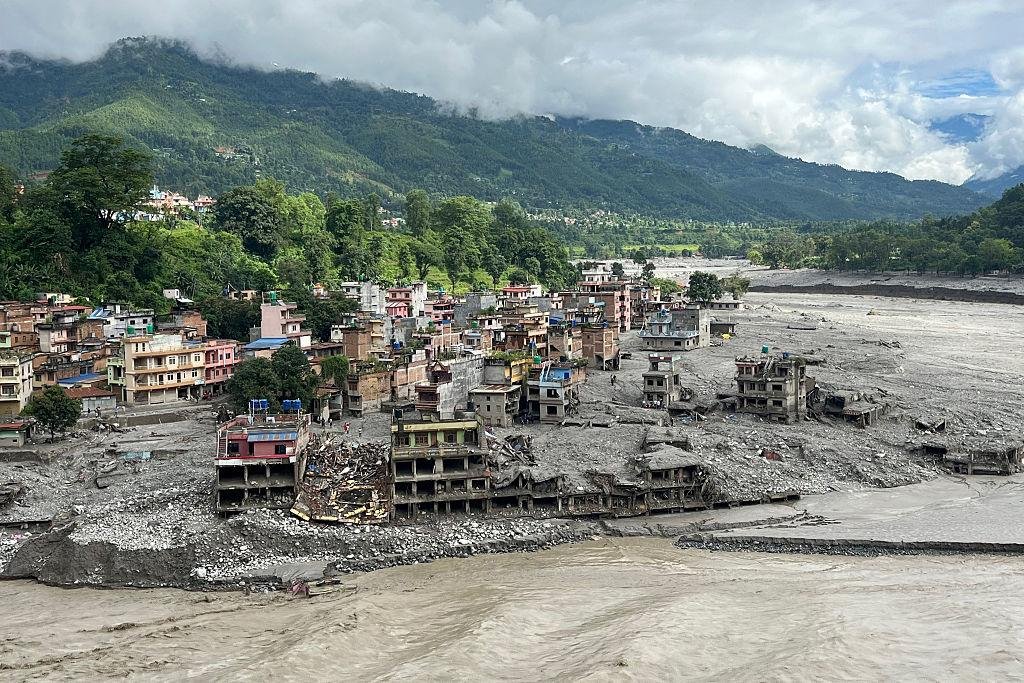
Nepal Flash Floods: The death toll from the devastating flash floods that struck Nepal on August 26 has risen to 1,385, while more than 5,000 people remain missing, according to the latest disaster update. Rescue and relief operations are continuing across several badly affected districts as authorities search for missing people and work to restore damaged infrastructure.
The disaster, one of Nepal’s deadliest in recent years, was triggered by an ice-rock avalanche near the Nepal-Tibet border, which sent a huge surge of water and debris through river valleys and communities.

Nepal Flood Death Toll Reaches 1,385
According to the latest update from Nepal’s National Disaster Risk Reduction and Management Authority (NDRRMA), 1,385 people have died in Nepal as a result of the disaster, while 5,130 people are still missing. More than 13,600 people have been rescued so far.
The death toll has continued to rise as rescue teams recover bodies from areas covered by mud, rocks and flood debris.
The latest reported deaths include:
- Chitwan: 364
- Nawalparasi East: 228
- Nawalparasi West: 222
- Nuwakot: 199
- Rasuwa: 185
- Gorkha: 77
- Dhading: 70
- Tanahun: 38
These figures underline the widespread impact of the disaster across central and northern Nepal.

What Caused the Devastating Floods?
The disaster began on August 26, 2026, after an ice-rock avalanche near the Nepal-Tibet border caused a sudden surge of water and debris into the river system.
The Bhote Koshi and Trishuli river corridors were among the areas badly affected. The sudden flood swept through villages, roads, bridges and infrastructure, leaving communities buried under mud and debris.
The World Health Organization said preliminary information indicated that the flooding in Rasuwa followed a sudden surge of water into the Bhote Koshi River from the Tibet Autonomous Region, possibly linked to an upstream ice avalanche and temporary damming.
Thousands of People Are Still Missing
The biggest challenge for authorities remains the search for thousands of missing people.
The latest Nepal figures put the number of missing at 5,130. Rescue teams continue to search damaged villages, river corridors and hydropower facilities.
The situation is particularly difficult around hydropower projects, where workers were caught inside tunnels when floodwaters and debris struck the area.
Reuters reported that more than 100 hydropower workers were feared trapped in tunnels during the disaster, while rescue teams have continued using specialized equipment to search underground areas.
Rescue Teams Continue Operations
Despite the scale of the destruction, rescue teams have managed to find survivors even days after the floods.
Several dramatic rescues have provided moments of hope. Rescue workers recently pulled people alive from hydropower tunnels and collapsed buildings after they had remained trapped for days.
In one case, two hydropower workers survived for nine days inside an underground tunnel before rescuers reached them.
Another elderly woman was found alive inside the remains of her collapsed home around ten days after the disaster.
These rescues have encouraged emergency teams to continue searching areas where survivors could still potentially be found.
Homes, Roads and Hydropower Projects Destroyed
The floods caused extensive damage to homes and critical infrastructure.
The World Health Organization reported damage to homes, markets, roads, bridges, customs facilities and hydropower infrastructure. Around 10,000 households were reported to need immediate relief, while several health facilities were also damaged or had their access disrupted.
The destruction of bridges and roads has made rescue and relief operations considerably more difficult, particularly in remote mountain communities.
India Provides Relief and Rescue Support
India has also been assisting Nepal following the disaster.
The Indian government has sent relief supplies and specialized personnel to support rescue, relief and forensic operations. According to recent reports, India has delivered more than 130 tonnes of relief material through special flights and deployed 54 experts to assist Nepal.
The assistance includes emergency shelters, blankets, hygiene kits, medicines, tunnel-rescue equipment and equipment used for identifying victims.
Health Risks Increase After the Floods
The disaster has also created significant public-health concerns.
Damaged water and sanitation systems, overcrowding and disrupted medical services can increase the risk of diseases, injuries and unsafe drinking water.
The WHO has warned about risks including diarrhoeal and respiratory illnesses, vector-borne diseases and other health problems following the flooding. Emergency medical teams have been deployed to affected districts to provide treatment and support.
Nepal-China Combined Death Toll
The disaster has also affected China’s Tibet region.
While Nepal’s confirmed death toll has reached 1,385, Chinese authorities have reported 43 deaths in the southwestern Xizang Autonomous Region. The combined death toll from the disaster on both sides of the border has therefore reached 1,428, according to the latest reported figures.
Thousands of people remain missing across both sides of the border.
Nepal Floods: What Happens Next?
The immediate priority remains the search for missing people, rescue operations and delivery of food, water, medicines and temporary shelter.
Authorities are also working to restore roads, bridges and other essential infrastructure. At the same time, health officials are monitoring the risk of disease outbreaks in flood-affected communities.
The scale of the disaster means that recovery could take months or even longer. Rebuilding homes, roads, bridges and hydropower facilities will require substantial resources and international assistance.
Conclusion
Nepal is facing one of its most devastating flood disasters in recent memory. The death toll has reached 1,385, while 5,130 people remain missing, according to the latest reported NDRRMA figures. More than 13,600 people have been rescued, but search and relief operations are still underway.
The disaster has destroyed homes and critical infrastructure across several districts and has severely affected hydropower projects and transportation networks.
With thousands of people still unaccounted for, rescue teams continue their search while relief agencies focus on providing food, medical care, shelter and clean water to affected communities.
Note: Disaster figures can change as authorities recover and identify victims. The numbers in this article are based on the latest available official and agency reports at the time of publication.
About the Author