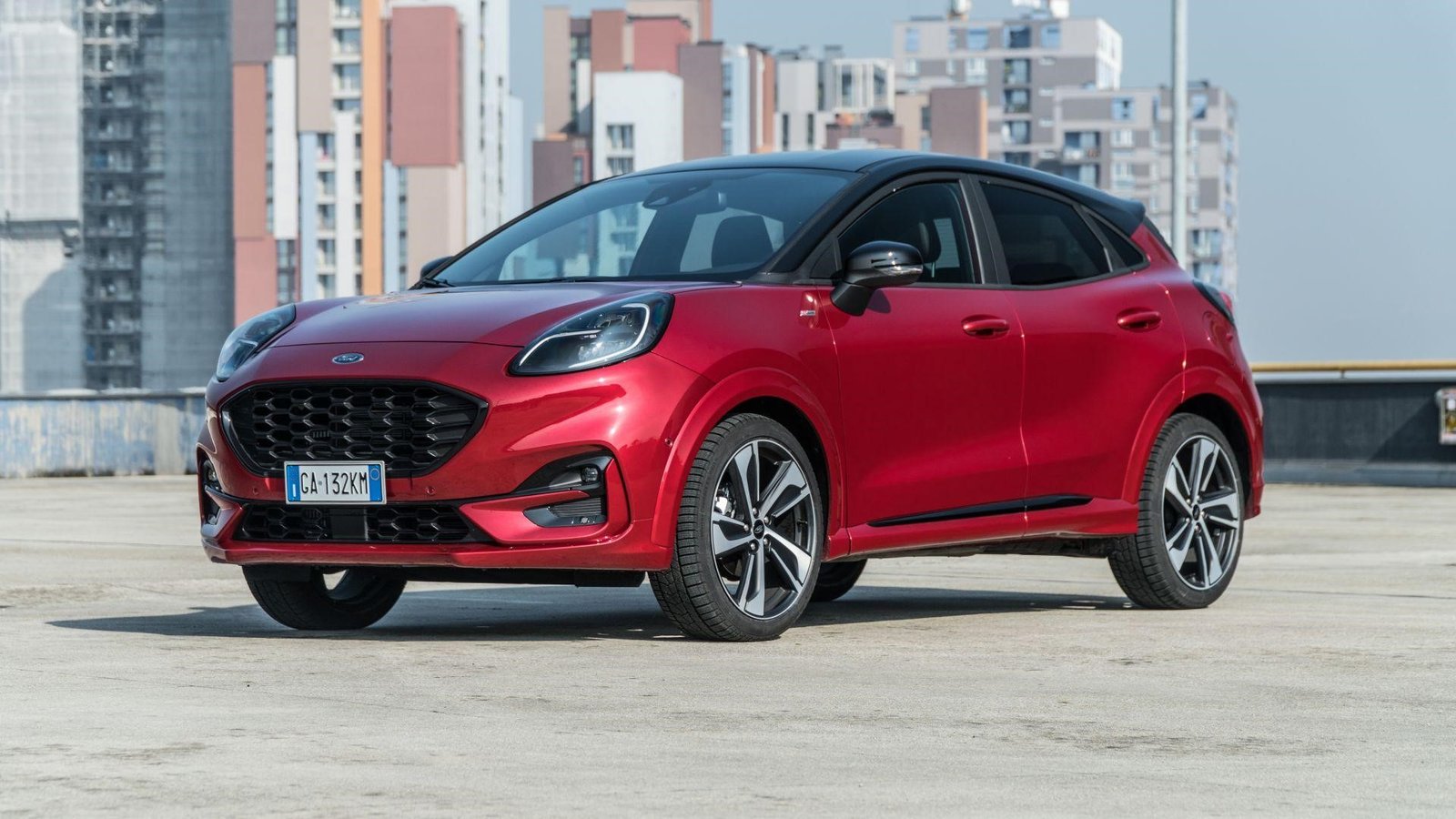
The Ford Puma is a stylish compact SUV designed for city driving, everyday commuting and weekend travel. It combines a sporty exterior design with a practical five-seat cabin, modern technology and efficient mild-hybrid petrol powertrains. Ford has also expanded the Puma family with the all-electric Puma Gen-E, giving buyers the choice between petrol mild-hybrid and fully electric driving.
The Puma is primarily sold in European markets rather than the United States, making it an important model for readers interested in Ford’s international SUV lineup.
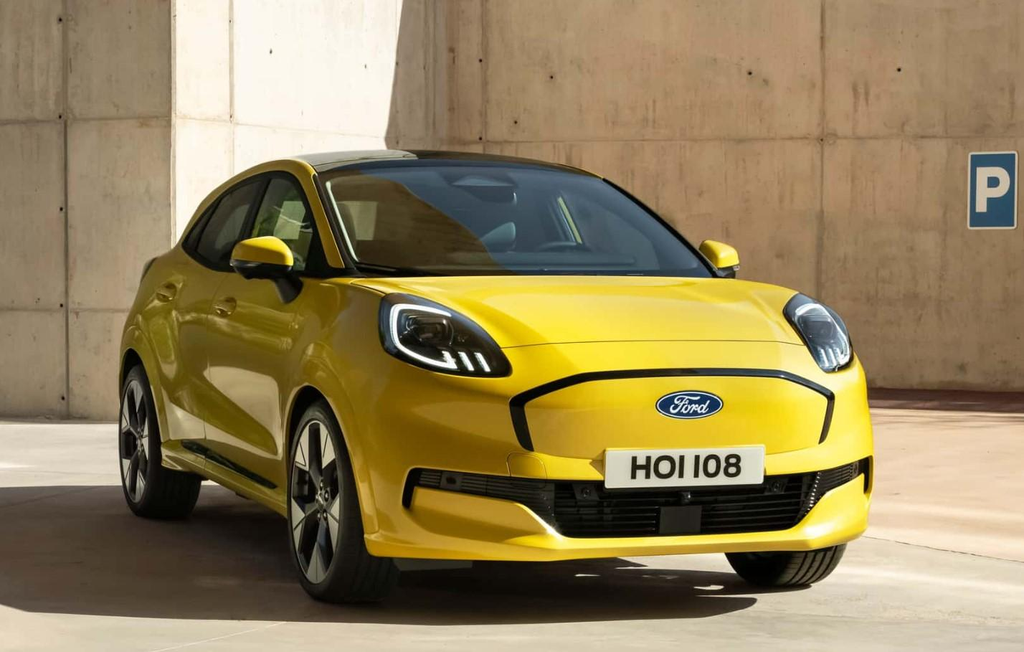
Ford Puma Price
In the UK, Ford currently lists the Puma Titanium 1.0-litre EcoBoost Hybrid with a 6-speed manual transmission from £27,145 OTR. Prices can vary depending on trim, transmission, options, promotions and customer savings.
The Puma range includes different versions such as Titanium, ST-Line and ST-Line X, while the electric Puma Gen-E is available separately.
For buyers considering the electric version, Ford’s current UK information lists the Puma Gen-E with a recommended OTR price that can vary according to government grant support and promotions. Ford’s Gen-E shop currently shows a recommended OTR price of £29,995, while promotional pricing can be lower.
Ford Puma Engine and Performance
The petrol Puma uses a 1.0-litre EcoBoost Hybrid (mHEV) engine.
Ford’s current UK specification includes a 125 PS version, while higher-output versions in the Puma range have also included 155 PS and 170 PS configurations with the 7-speed dual-clutch automatic transmission. The 125 PS version produces up to 210 Nm of torque, while the 155 PS version produces up to 240 Nm.
Transmission choices include:
- 6-speed manual
- 7-speed DCT automatic
The mild-hybrid system uses regenerative braking to recover energy and provide additional assistance to the petrol engine.
This makes the Puma particularly suitable for stop-and-go city driving while maintaining a sporty driving character.
Ford Puma Mileage and Fuel Efficiency
Fuel consumption depends on the engine, transmission, wheel size, traffic and driving conditions.
The mild-hybrid system is designed to improve efficiency by recovering energy during deceleration and using that stored energy to support the petrol engine when required.
Drivers who spend most of their time in urban traffic can benefit from the hybrid assistance, while highway fuel economy depends heavily on driving speed and road conditions.
The Puma is therefore positioned as an efficient alternative to larger petrol SUVs.
Ford Puma Exterior Design
The Ford Puma has a sporty crossover design with a raised driving position and compact dimensions.
Depending on the trim, exterior features can include:
- LED headlights
- LED daytime running lights
- Alloy wheels
- Sporty ST-Line styling
- Rear spoiler
- Roof rails
- Power liftgate
- Distinctive Ford grille
- Multiple exterior colour options
The ST-Line versions add a more aggressive appearance for buyers who want a sportier-looking compact SUV.
Ford Puma Interior and Features
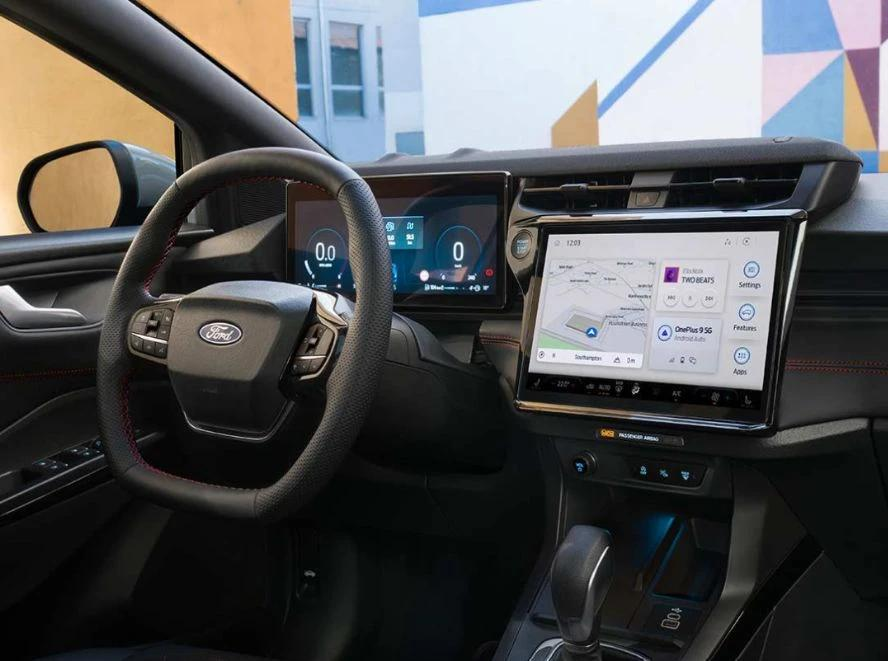
The Puma’s cabin is designed around technology, practicality and everyday comfort.
Depending on the trim, features can include:
- 12-inch SYNC 4 touchscreen
- 12.8-inch digital instrument cluster
- Wireless Apple CarPlay
- Wireless Android Auto
- Wireless smartphone charging
- 5G connectivity
- Over-the-air software updates
- Heated seats
- Premium interior finishes
- Power liftgate on selected versions
- Premium B&O audio system on selected variants
Ford also gives the Puma a useful MegaBox storage compartment, adding extra flexibility for carrying muddy or bulky items.
Ford Puma Driving Modes
The Puma offers selectable driving modes designed to adapt the vehicle’s response to different conditions.
Current Ford information lists:
- Normal
- Eco
- Sport
- Trail
- Slippery
These modes can modify engine response, traction and stability settings depending on the selected driving environment.
This makes the Puma more versatile than a typical small urban crossover.
Ford Puma Safety and Technology
Safety and driver assistance are important parts of the Puma package.
Depending on specification, features can include:
- Lane-Keeping Assist
- Intelligent Adaptive Cruise Control
- Speed Sign Recognition
- Rear parking sensors
- Rear-view camera
- Blind-spot monitoring
- Cross-Traffic Alert
- Automatic emergency braking
- Parking assistance
Ford has also introduced BlueCruise availability for the Puma with the appropriate automatic transmission and optional driver-assistance package. BlueCruise provides hands-free driving assistance on designated motorway sections while the driver must remain attentive.
Ford Puma Gen-E: All-Electric Version
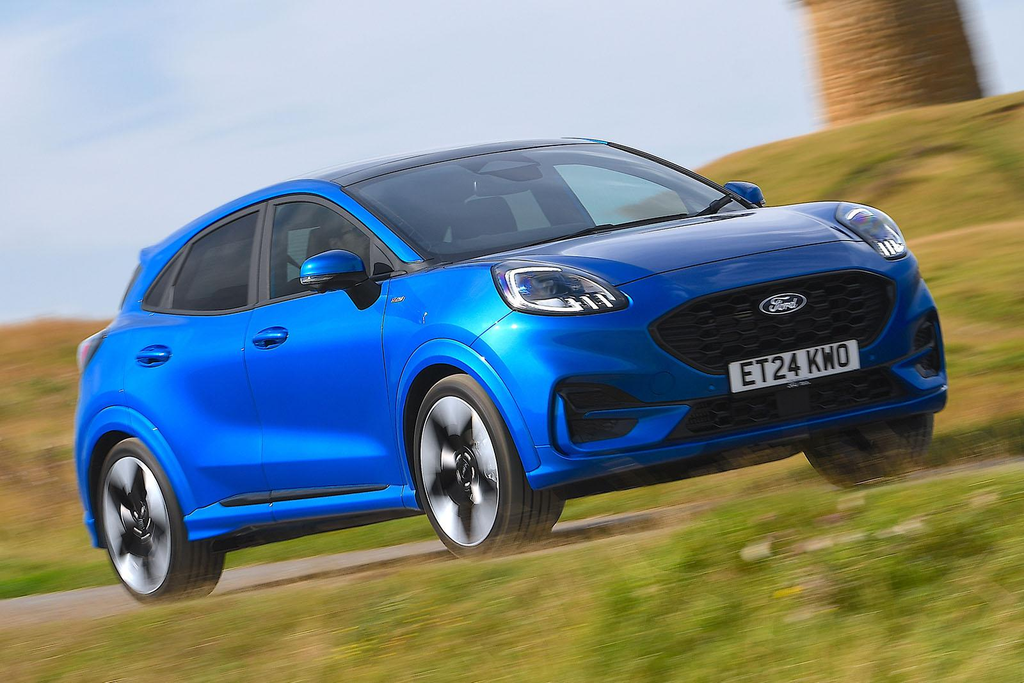
One of the biggest developments in the Puma family is the Puma Gen-E, the fully electric version.
The Puma Gen-E uses a 43 kWh usable battery and a front-mounted electric motor producing 168 PS and 290 Nm. It uses a single-speed automatic transmission and front-wheel drive.
Ford says the Gen-E can charge from 10% to 80% in around 26 minutes using a 100 kW DC fast charger, while its maximum advertised WLTP range is up to 259 miles, depending on specification and conditions.
The Gen-E also retains the Puma’s practical character, with Ford quoting up to 566 litres of combined storage including the rear storage area, MegaBox and frunk.
Ford Puma Pros and Cons
Pros
- Stylish compact SUV design
- Efficient mild-hybrid petrol engine
- Automatic and manual options
- Sporty ST-Line styling
- Modern touchscreen and digital display
- Practical MegaBox storage
- Available BlueCruise
- Fully electric Puma Gen-E option
- Good city-friendly dimensions
Cons
- Mainly targeted at European markets
- Rear space is not as generous as larger SUVs
- Higher trims can become expensive
- Electric Gen-E availability varies by market
- Real-world EV range can be lower than WLTP figures
Is Ford Puma Worth Buying?
The Ford Puma is a strong option for buyers who want a compact SUV with a sporty appearance and practical everyday usability.
The mild-hybrid petrol version makes sense for customers who want the convenience of a conventional petrol vehicle with additional hybrid assistance. The automatic DCT version is particularly attractive for city driving.
For buyers ready to switch to electric, the Puma Gen-E provides a fully electric alternative while retaining the compact SUV format.
Its combination of technology, storage flexibility, driving modes and modern styling makes the Puma one of the more interesting compact SUVs in Ford’s European range.
Final Verdict
The Ford Puma combines compact SUV practicality with sporty styling, mild-hybrid efficiency and modern technology.
Its 1.0-litre EcoBoost Hybrid powertrain is available in different power outputs, while the Puma Gen-E adds a fully electric alternative with 168 PS, 290 Nm and a 43 kWh usable battery.
For buyers who primarily drive in cities, the Puma’s compact dimensions, hybrid assistance and available automatic transmission make it an appealing choice. Meanwhile, the Gen-E is worth considering for drivers who want zero-tailpipe-emission electric mobility without moving to a large SUV.
Before booking, check the latest variant-wise price, waiting period, discounts, insurance and on-road price at your nearest authorised Ford dealership.
About the Author